
Chinese Rice Porridge: Taste of Home
Imagine a cold, damp morning or a time when you felt unwell, needing the simple comfort of a bowl of Chinese rice porridge. Now, picture a steaming bowl of silky, white rice porridge. This humble dish is ‘zhou’, known globally as congee. For millions of people in China and the Chinese diaspora, this is far more than just a meal. It is a warm hug in a bowl. It represents safety, family history, and the deepest possible sense of belonging.
More Than Just Chinese Rice Porridge
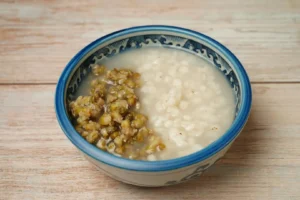 At its core, congee is incredibly simple. Cooks boil a small amount of rice in a large volume of water or stock. They simmer it gently for hours. Eventually, the rice grains break down completely. The result is a smooth, creamy, and comforting texture.
Yet, this simplicity is deceptive. The plain, mild base acts as the perfect canvas for endless flavours. You can add savoury toppings like pork floss, century eggs, or pickled vegetables. Alternatively, some people prefer sweet versions with dates or sugar. However, the elaborate toppings are secondary to the base itself. The true power lies in the warm, liquid rice.
The Psychology of Comfort Food
Why does this modest dish hold such immense power over emotions? Psychologists frequently study the strong link between food, memory, and feelings of security.
Food as an Emotional Anchor
Often, our strongest food memories form during childhood. A parent or grandparent likely served congee during your earliest years. Therefore, the specific smell of simmering rice becomes intrinsically linked to feelings of being protected.
Eating it as an adult immediately triggers those buried memories. Your brain releases dopamine, the ‘feel-good’ chemical, upon tasting it. Consequently, you feel calmer almost instantly. It is an emotional anchor to a simpler time.
The Healing Bowl
 Furthermore, congee holds a strong association with physical healing in TCM (Traditional Chinese Medicine) philosophy. It is often the very first solid food a baby eats. Conversely, it is sometimes the only food considered suitable for the elderly or infirm. It is exceptionally easy to digest and deeply hydrating.
When a person feels ill, their body naturally craves this gentle nourishment rather than heavy, complex meals. The act of eating it signifies the beginning of recovery. It is medicine for both the body and the soul.
Chinese Rice Porridge as Cultural Care
In many traditional Chinese families, people do not always express love verbally. Instead, they show care through continuous action, and specifically, through feeding others.
Serving a hot, fresh bowl of zhou to a tired family member is an act of profound affection. It communicates, without words, “I want you to be well. I am looking after you.” The time and patience required to simmer the porridge perfectly demonstrates devotion. Therefore, this humble dish defines comfort not through extravagance, but through consistency and gentle presence.
All in all, the power of zhou lies not in complex culinary techniques. It lies in its ability to transport people back to a place of safety. In a fast-paced, often stressful world, we all seek stability. For many, that stability is a steaming bowl of rice porridge. It truly is the universal taste of home.