
Cantonese Cuisine London Has Embraced Wholeheartedly
Discover Cantonese cuisine London loves – walk Gerrard Street on a Saturday and hear the woks, steamers and stories before you even see them. The clatter of bamboo steamers. The hiss of a wok. Someone shouting an order in Cantonese above the hum of trolleys. This little stretch of London, a few minutes’ stroll from Covent Garden, holds one of the longest food stories in Britain. It started thousands of miles away on the banks of the Pearl River. And it’s still being written today, basket by basket, on tables across the city.
Where It All Began: Canton’s Kitchens
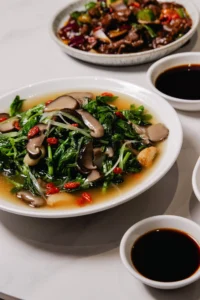 Cantonese cooking grew up in Guangdong, the southern Chinese province once known to the West as Canton. It’s a place blessed with good fortune at the table. The Pearl River Delta gives you seafood. The warm climate gives you year-round vegetables and rice. The old port of Guangzhou gave you something else entirely: traders from across the world, dropping off ingredients and ideas for centuries.
That openness shaped the food. Cantonese chefs never developed the heavy hand you find further north or west. Instead, they learned to step back. A fish steamed with nothing more than ginger, spring onion and a splash of hot oil tastes of the sea, not the seasoning. That restraint is the whole point.
The Building Blocks
A handful of ingredients show up again and again. Soy sauce, oyster sauce, rice wine, ginger and spring onion form the backbone. Roast meats hang glossy in shop windows – char siu, soy-poached chicken, crackling pork belly. And then there’s wok hei, the smoky “breath of the wok” that you can only get from a screaming-hot pan and a cook who knows what they’re doing. You can’t buy it in a bottle. You have to feel it.
How Cantonese Cuisine Reached London and Britain
The first Chinese sailors arrived in London in the late 1700s, working the East India Company ships and settling around Limehouse docks. That was the first Chinatown – long gone now, mostly bombed out during the Blitz.
The bigger wave came after the Second World War. Families from Hong Kong’s New Territories, many of them rice farmers facing tough times, took up the British government’s invitation to fill labour shortages. They opened chippies, then small restaurants, then takeaways on practically every high street. By the 1960s and 70s, the community had shifted west from Limehouse to Soho. Gerrard Street was pedestrianised in 1985, and modern Chinatown was born.
Why the Covent Garden Corner?
Geography did most of the work. Theatres, tourists, late-night crowds – everyone passes through Soho and Covent Garden eventually. Cantonese restaurants set up shop where the footfall was, and they stayed. Some softened their menus for British palates. The best ones didn’t budge. You can still order tripe, chicken feet and braised goose webs within a few minutes’ walk of the Royal Opera House if you know where to look.
The Numbers Behind London’s Cantonese Cuisine Bowls
Cantonese food isn’t a niche interest here – it’s part of the national diet. Chinese cuisine sits comfortably among Britain’s top three takeaway choices, and the UK’s Chinese restaurant sector turns over more than £2 billion a year. London’s Chinatown alone packs over 80 Cantonese-leaning restaurants into roughly a square mile. Searches for “dim sum” in the UK have climbed by nearly 50% over the last five years. The appetite isn’t slowing down.
Frequently Asked Questions
What’s the difference between Cantonese and other Chinese cooking?
Cantonese food is the light-touch end of the spectrum. Sichuan goes heavy on chilli and numbing peppercorn. Northern cooking leans on wheat, dumplings and bold sauces. Cantonese cooking trusts the ingredients.
Is dim sum Cantonese?
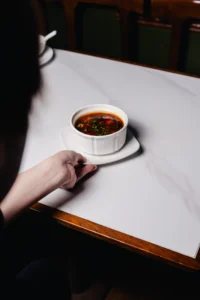 Yes – dim sum is Cantonese to the core. It started in the teahouses of Guangzhou and was perfected in Hong Kong. The phrase means “to touch the heart”, which tells you everything about how it’s meant to be eaten: slowly, with company, over endless pots of tea.
Where can I eat proper Cantonese food near Covent Garden?
Cross over to Chinatown – it’s a five-minute walk. Joy King Lau, just off Leicester Square on Leicester Street, has been serving classic Cantonese dishes and dim sum since 1985. Look for the places with roast ducks hanging in the window and Cantonese spoken at the next table. That’s usually a good sign.
Why did Cantonese food become the British “default” Chinese?
Because the families who emigrated here were Cantonese. Migration patterns wrote the menu. For most of the 20th century, “Chinese food” in Britain effectively meant Cantonese food from Hong Kong, often tweaked to suit local tastes.
A Story Still Being Cooked
The interesting thing about Cantonese food in Britain is that it never really settled. The first generation cooked to survive. Their children cooked to make a living. The third generation – many of them British-born – are cooking to make a point. New dim sum bars, modern Cantonese kitchens, supper clubs run out of front rooms in Hackney. The form keeps changing. The soul doesn’t.
So when you sit down to a plate of char siu or pull a har gao apart with your chopsticks, you’re not just having lunch. You’re holding two hundred years of history between your fingers – from the Pearl River to the Thames, and now to the table in front of you.