
London Dim Sum Guide for Beginners
Discover yum cha with our London dim sum guide. Order baskets, pour tea, and eat like a regular with confidence today. Maybe you once peered into a busy Chinese restaurant and felt completely lost. This guide is for you. Yum cha can look chaotic at first. Trolleys rattle past, baskets stack up high, and everybody seems to know the rules. However, the basics are simple once you learn them. So let us walk through everything a beginner needs. Soon, you will order dim sum with real confidence.
What Is Yum Cha, Exactly?
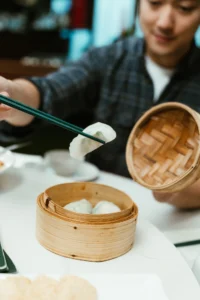 Let us answer the big question straight away. “Yum cha” means “drink tea” in Cantonese. Meanwhile, “dim sum” loosely translates as “touch the heart”. Therefore, yum cha describes the whole experience, while dim sum refers to the little dishes. You sit down, you pour the tea, and you order small plates to share. Most baskets hold three or four bite-sized pieces. Because the portions stay small, you can sample plenty without overdoing it.
Your London Dim Sum Guide By the Numbers
Now for some context that shows how big this tradition has become. The global dim sum market reached USD 7.04 billion in 2025. Moreover, analysts expect it to climb to USD 11.99 billion by 2033. That growth runs at a steady yearly rate of roughly 6.87%. Asia-Pacific still leads the way, holding around 70% of the market. So you join millions of happy fans every single weekend.
The roots run deep, too. Travellers once rested at teahouses along the ancient Silk Road. Over time, owners added small snacks to go with the tea. As a result, southern China gave birth to the yum cha tradition, especially around Guangdong.
How a Yum Cha Meal Works
Start With Tea
First, choose your tea. Popular options include jasmine, oolong, and pu-erh. The waiter pours the first round, then you take over. When your pot runs low, simply rest the lid ajar on top. This neat signal tells staff to bring a refill. Also, give a gentle two-finger tap on the table. That tap says thank you when someone pours for you.
Order in Rounds
Next, order in small waves rather than all at once. Traditionally, trolleys roll past with stacked baskets. You point at what you fancy, and staff mark your card. Many modern places now use paper menus instead. Either way, keep ordering steadily until everyone feels full.
What to Order in This London Dim Sum Guide
The Must-Try Classics
Begin with the famous four. Har gow are plump prawn dumplings in a clear, glossy wrapper. Siu mai are open pork-and-prawn parcels that hold a dot of roe on top. Char siu bao are fluffy buns that hide sweet barbecue pork inside. Finally, cheung fun are silky rice noodle rolls that soak up soy sauce.
Build a Balanced Table
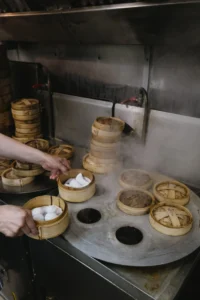 A smart order mixes textures and styles. Therefore, pick something steamed, something fried, and something sweet. Add an egg tart for pudding. Spring rolls or sesame balls bring the crunch. This simple spread teaches any beginner the basics in one sitting.
Quick Etiquette Tips
Always pour tea for others before you fill your own cup. Likewise, share every dish rather than guarding your favourite. Eat the lighter steamed items first, then move on to fried and heavier plates. Keep the pace slow, because yum cha rewards good chat as much as good food.
Frequently Asked Questions
What does yum cha mean?
Yum cha means “drink tea” in Cantonese. It describes the meal of tea plus shared dim sum dishes.
Is yum cha only for breakfast?
Traditionally, yes. Yum cha once ran from morning to early afternoon. However, many modern restaurants now serve it all day.
How much dim sum should I order?
Order around three or four dishes per person to start. Then keep adding rounds until your table feels happy and full.